Jamming with Jam

Hey there makers. We just did a practice run through of a class on jamming tonight.

Would there be much interest in doing 2 classes on jamming Wednesday? (Each would be for 4 people) Or should I keep it to one and just plan on sticking around if people have other stuff they want to turn into jam?

We would be jamming sand plums for both sessions otherwise. The plums may be nearing the end of their season which would make it harder to keep using them for classes, but I might be able to hit the blood orchard for peaches soon if there is enough demand.

Blood Orchard will not have peaches this year. Redirecting...

Are we legally allowed to hold classes?

Where would the question of legality come in? Are the fruits being assaulted?
Are the jars blackmarket?

We have a break room. It is not a commercial kitchen. We need to make sure we are not violating any laws if we want to do classes.

Yes, cooking food for consumption has regulations we have to abide by.

Can you send me a link to those regulations? I’m not finding them right off the bat at the city, county, or state level.

We aren’t doing anything with meat, which would negate the requirements I know of. Since the food being produced is a result of the class and not being directly sold, that negates a lot of the other problems to.

…so if we can teach a class on jamming, that might also open the door for teaching classes on other cooking classes.

I’ll call the county health department on Monday to be safe.

From my understand we would be a food establishment by the first line.

https://agriculture.ks.gov/faqs/food-safety-faq

A Food Establishment is any operation that provides food directly to the end consumer. A Food Establishment is defined in Kansas law as any place in which food is prepared, served or offered for sale or service on the premises or elsewhere. Food Establishments include eating or drinking establishments, fixed or mobile restaurants, coffee shops, cafeterias, short order cafes, luncheonettes, tea rooms, grills, sandwich shops, soda fountains, taverns, private clubs, roadside stands, industrial feeding establishments, catering kitchens, commissaries and any other private, public or nonprofit organizations routinely serving food as well as grocery stores, convenience stores, bakeries and locations where food is provided for the public with or without charge. Roadside markets that offer only whole fresh fruits, nuts and vegetables for sale are not considered Food Establishments.

At the end of that paragraph it says:

ā€˜Roadside markets that offer only whole fresh fruits, nuts and vegetables for sale are not considered Food Establishments.’

I’m offering the fruits, the consumer is making the jam.

Would calling it a ā€œworkshopā€ instead of a class be a consideration?

No matter what you call it class or workshop it’s still a service in a non-complying kitchen.

According to:

https://agriculture.ks.gov/divisions-programs/food-safety-lodging/food-sales-at-farmers’-markets

  • Home-canned products, except traditional jams and jellies, are prohibited without proper licensing.

I am understanding that bullet point to mean if we are strictly making traditional jams or jellies we should be perfectly fine.

My thought from just the topic title went to making informally arranged music. Maybe lead by someone named Jam.

A Food Establishment is defined in Kansas law as any place in which food is prepared, served or offered for sale or service on the premises or elsewhere.

I would say that the end result is not offered for sale or service and the fee is for the class, not the jam. If the jam was being made to sell for benefit of MakeICT then yes, but as the monies if any changing hands is for learning how it doesn’t fall under that code.

This only covers the sale of jams and jellies.

ā€œThe direct-to-consumer sale of foods that do not require temperature control for safety or specialized processing is allowed at farmers’ markets and similar locations without a food establishment license. Internet sales, including shipping, are also allowed under this license exemption, subject to the receiving states’ requirements.ā€

I think it’s best to ask the state what is required to teach such a class and get a clear direct answer from them.

If you perfer not to talk to the state, the Derby Recreation Commission has a Culinary Arts classroom.

https://www.derbyrec.com/560/Culinary-Arts

In Kansas jams and jellies can be made in the home for sale. So if you wanted to do this at home, I think you are fine… but the makerspace is likely different in the eyes of the health department since they specifically mention it is ok to do in the home.
Also, if you read the regulations carefully, it doesn’t require money to be exchanged.

I love the idea of us being able to teach cooking classes. We need to get the ducks in a row.

1.) Talk to the health department about what requirements might be applicable.
2.) Check with the insurance company to see if we will need any upgrades in the makerspace (like upgrading fire suppression, for example.) or if there will be any up charges for cooking in the space.
3.) Make sure we have our legal butt covered for things like accidentally serving peanuts or other allergy foodstuffs.

A couple of quotes from the Kansas department of agriculture: (Starting a Food Business)

Food Establishment. Any operation that offers food, which includes beverages, directly to the end consumer is considered a Food Establishment. Common examples are grocery stores, convenience stores, restaurants, school food service operations, caterers, bakeries, mobile food operations, bars, taverns, and delicatessens. Any place where food is served or prepared for sale or service on the premises or elsewhere. Any other eating or drinking establishment or operation where food is served or provided for the public with or without charge falls under the Food Establishment umbrella.

I would definitely get some guidance… maybe talk to the folks at the State Extension Center. It seems like a question they might be able to answer.

Definitely make sure you know the regulations on jam… as I would never have guessed that pepper jelly has special requirements.

"Traditional fruit jams and jellies rely on acidity (measured as pH) and available moisture (measured as Water Activity) to prevent formation of botulinum toxin, which causes botulism.

Adding the flesh or seeds of peppers to a jam or jelly can change the food chemistry enough to allow botulinum toxin to form. This type of product must be evaluated by a process authority. One option for product evaluation is the Kansas Value Added Foods Lab at K-State.

Adding a small amount of pepper-flavored vinegar or pepper powder to a jam or jelly does not require product evaluation before sale under the Direct-to-Consumer license exemption."
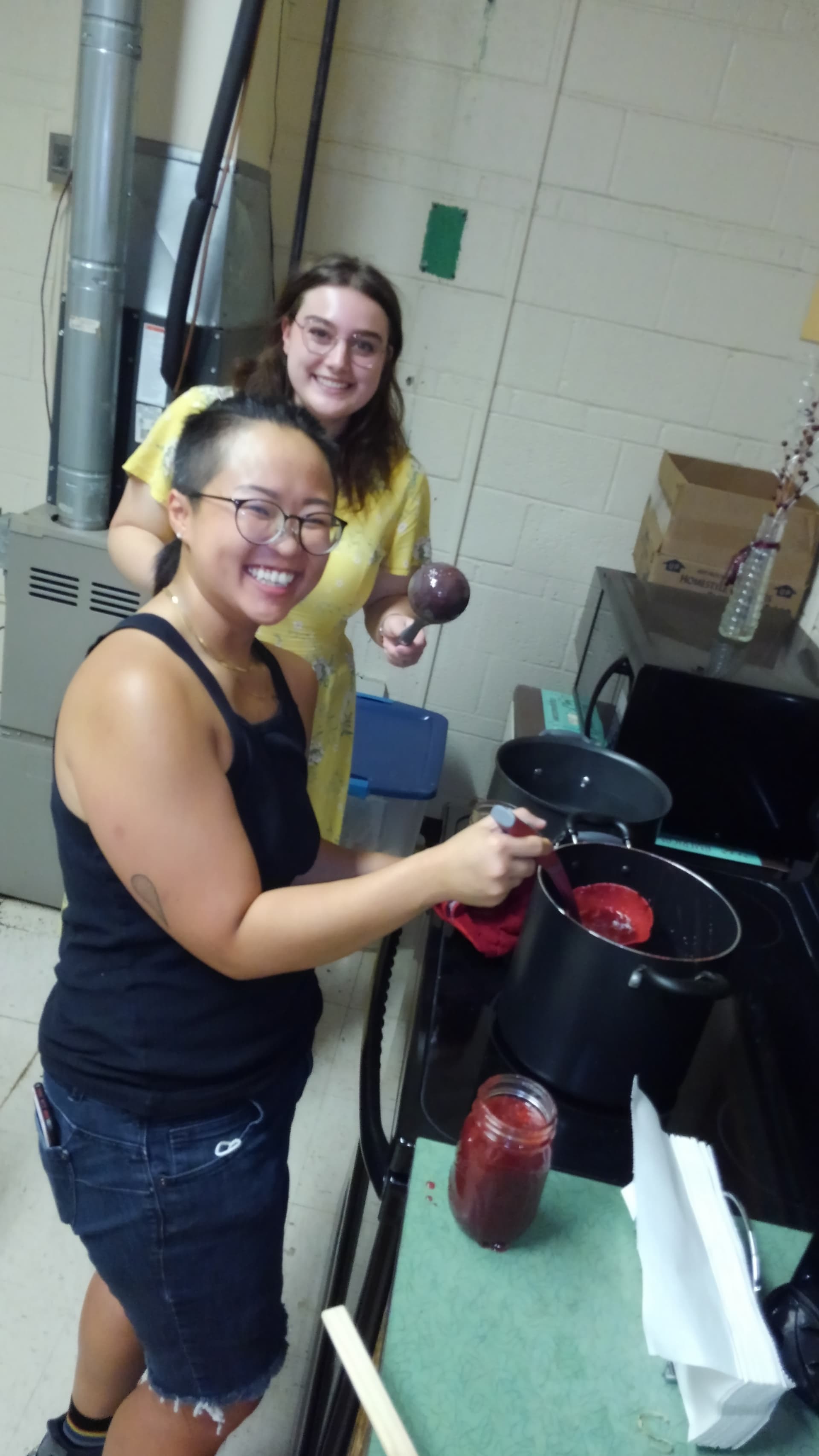
Talked to Sedgwick county food safety.

As long as an individual (not organization) does not offer classes more than 6 days in a calendar year, no food establishment license is required. The other caveat is that the end product is not consumed on site.

That applies to if the individual supplies the fruit or vegetables to be used for the class. If the students provide their own fruit or vegetables then that day limit does not apply and the individual can teach the class as often as they want.

So because I supplied the plums for Saturday’s jam session, I can supply the veggies and fruit for 5 more days until July 31st 2022.

So can events put Jamming for jam every other month? LOL!

Do we have a classes information on the wiki? This sounds like info we may need later

I don’t think we have anything official on the wiki yet.

I will be calling them with more questions later and attempt to bring up a policy to the next board meeting.

This is something I’d be interested in. Let me know if this is a thing, please? I’ll check the calendar, too