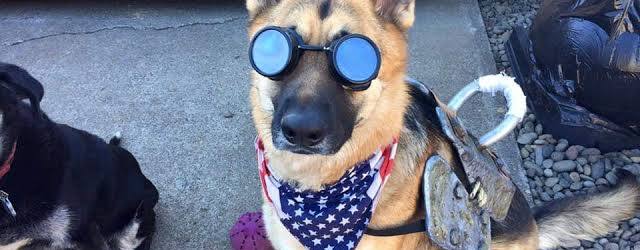
MakeICT has at least one member with a service dog. Due to their working nature, it is important to be familiar with how a service dog differs from other dogs.
TL;DR version: Service dogs perform (a) task(s) to mitigate an ADA qualifying disability. Disabilities may be invisible. You may not ask a person’s disability. Do not touch, pet, feed, or otherwise distract a service dog. Do not ask if you can do so either, the answer is no. Service dogs are allowed anywhere the person handling the dog is allowed. Service dogs have their own rules they have to follow, but if you do not read and refer back to the rest of this post then you are not qualified to try to hold a dog or handler to the rules. There is no registration required for a service dog in Kansas and the ADA does not allow for it either. Service dog registries are by and large fake, though there’s no reason a legitimate service dog cannot be “registered”.
Full version:
Service dogs may mitigate a wide variety of disabilities, including seeing eye, hearing, mobility assistance, detection of seizures, blood sugar extremes, elevated heart rates, or psychiatric disabilities, and many others. Tasks may include alerting (of noises, or to find a safe position for a seizure or a fainting spell, or of blood sugar treatment needs, among others), navigating, providing stability for standing or walking, reminding to take medication, physical pressure to alleviate high heart rate or psychiatric stress, retrieving objects, as well as many others. Sometimes the tasks of a service dog may include getting the attention of people nearby so they may call for emergency services.
Service dogs might be trained by a formal organization or they might be shelter dogs trained at home, or any other wide variety of situations. No registration is required. Most service dog registries are fake. Sometimes a service dog handler obtains registration anyway because the general public gives them less stress if they have it.
It is rude to distract a service dog in any way, and it is rude to ask the handler if you may do so. This includes touch, petting, intervening with its actions, feeding, etc. When the dog is distracted, it cannot perform its job. Many common human behaviors are very stressful to dogs (including simple petting, and hugs are worse!), and these dogs are too large of an investment to risk stressing them unnecessarily.
The only two questions which may be asked of a service dog handler is a) is this a service dog and b) what task does the dog perform.
Therapy dogs and emotional support animal (ESA) dogs are not service dogs. Psychiatric service dogs perform specific tasks for a disability; they are very different from emotional support dogs. Therapy dogs have proven behavior which has gained them access to liability insurance so they may visit hospitals and schools in addition to many other places; there is no federal law requiring they have access. Emotional support dogs do not have access to public spaces, they primarily have access to housing. ESA dogs used to have more airline access but the FAA has recently begun allowing airlines to further restrict ESA access.
The service dog must be under control of the handler, and unless a leash or similar attachment would interfere with the dog’s job, one is required. The vast majority of legitimate service dogs will never have such issues. Even legitimate service dogs may be asked to leave a public establishment if it is out of control and the handler cannot or will not control it, or housesoiling. If this happens, the establishment must still allow the person to obtain the goods or services without the dog’s presence. The vast majority of legitimate service dogs will never have such issues. It is imperative that service dogs not be subject to other people or the rude behavior of other dogs, because under enough stress any dog will become aggressive. These dogs may have been expensive to purchase and even more expensive to train (time, and or money) as training generally takes several months at best.
The presence of many fake service dogs is creating a high frequency of problems for those with actual service dogs. Fake service dogs will create problems directly for real service dogs due to poor behavior, or indirectly by making people suspect the real dog is fake.
Please speak up if you have questions! Thank you!